Currently Reading: Take This Bread by Sara Miles and homework!
Well folks, I can now officially say that I am a grad student. I always get a bit overwhelmed when I start something new, but I am looking forward to settling into my new schedule and routine, (ideally) perfectly balancing school with work with family.
Today will be a quick post since I have a lot of homework to finish before we go to Colorado for a few days. One of my best friends is getting married, which makes me happier than words could possibly express. I am honored to stand up with her as a bridesmaid, although I hope not to make a spectacle of myself, since I tend to get overly weepy at weddings. :)
For those who don't know, I am studying Library and Information Studies, with a specialization in Archives and Records Management. It may be a mouthful but after my two classes yesterday, I couldn't stop grinning. It is a massive relief to feel in your soul, despite the overwhelming feelings or the worries about doing well, that you are in the right place. I am excited to follow this path and see where it leads me.
Speaking of readings for school, I absolutely had to share one for my Introductory class that focuses solely on reading: the act of reading, how readers read and why, and why this matters to libraries. The book is called Reading Matters: What the Research Reveals About Reading, Libraries, and Community by Catherine Sheldrick Ross and I wholeheartedly recommend it to anyone who is interested in the act, the purpose, and sometimes the pure magic of reading. We only had to read the first chapter for our assignment, which mostly focused on why the myth that "reading is dying" in our society is not true. It also explores libraries' role not only to provide learning materials, but also to provide entertainment, and reading for pleasure. That reading for pleasure should not be something shameful, but something embraced, because "people have a deep need not just for facts, but for story." That there are many ways of reading, whether aloud, on an e-reader, or with a group, and that all of these ways of reading are legitimate and important. Throughout the chapter, I kept finding myself mentally cheering or recognizing with a jolt a facet of my own reading experience articulated in ways I never would be able to. One of my favorite passages in the article is quoted from Sara Nelson's book So Many Books, So Little Time, "I don't always choose the books...Sometimes the books choose me." What a beautiful line.
The end of the chapter encourages us as readers and librarians to reflect on our own reading history and experiences. Nelson's quote resonated because it seems that my favorite books- the ones that touched an inner part of my soul in deep and profound ways, or spoke to me in a way that seemed to reflect my own mind- have been ones that I have stumbled onto, not sought out. I love the many ways books come into our lives, and I love that every reader is unique. I love that each book is different to each person who picks it up and I love how diverse the reading world is. I am privileged to be a part of the literary world, and to call myself a reader. It is part of my identity, part of what makes me who I am. I wouldn't want it any other way.
A couple shout-outs today: thank you to my Georgia friend, Jillian, who wrote such a beautiful review of my blog on her own wonderfully written blog, A Room of One's Own. Jillian is a kindred spirit, someone who understands me and my passions, because she shares them herself. I love following her reading journey; if there's anyone I want to spend hours with in a coffee shop someday, it's her. Also, Book Harbinger is hosting "Seven Days with Sevenwaters", in which guest bloggers write about their relationships with the Sevenwaters series. As many of you know, the Sevenwaters series is one of my favorite book series ever. They chose me when I was a lonely, insecure high school kid, and they remain precious to me today. I recommend checking both of these blogs out!
Have a great week! I probably won't be back on here until after our trip, but I'll write soon. Colorado, here we come!
Showing posts with label power of reading. Show all posts
Showing posts with label power of reading. Show all posts
Tuesday, September 11, 2012


Sunday, March 11, 2012
Book Fate
Spring's a'coming! As I drove home from a friend's house this morning, with the Civil Wars blasting in my car and the sun warming up the picture-perfect farm fields all around me, I felt as if my soul awoke after a long winter of hibernation. Driving through God's creation is like attending a worship service, just as powerful and just as beneficial.
Three books in three weeks- my track record has been pretty good so far and I have enjoyed all three, each one vastly different from the other. So here for your perusal are the random thoughts that accompanied each book, during and after reading. Tonight, I'll discuss Frank Delaney's The Last Storyteller.

Three books in three weeks- my track record has been pretty good so far and I have enjoyed all three, each one vastly different from the other. So here for your perusal are the random thoughts that accompanied each book, during and after reading. Tonight, I'll discuss Frank Delaney's The Last Storyteller.

I believe in book fate. There have been times in my life where I have found myself reading the perfect book for the circumstance I am going through, completely by accident. Just like God brings certain people into our lives at opportune moments, I think sometimes He sees what we're going through and pulls the perfect book from the shelf. The Last Storyteller was my travel companion when I went to my Opa's several weeks ago to sit with him, celebrate his life, and say goodbye. As I sat there at home the next day, soaking in everything that had happened, I read voraciously. Reading is therapy, and Frank Delaney delivered. Delaney is a true storyteller, the kind one reads about in the old Irish tales about seanchai and wandering bards, weaving tales from thin air. When I listen to him read his books, I imagine him in the old tradition, pipe in hand, wreathed in smoke from a hearth fire. His voice makes each word and letter resonate, physically vibrate with depth and substance; it's an otherworldly experience.
The Last Storyteller was the final installment of a three part series, one that is part love story, part coming of age story and entirely captivating. It follows Ben MacCarthy, a collector of Irish mythology for the Irish Folklore Commission, who has wandered the Irish countryside for decades, trying to understand his own life and the decisions he has made. Bereft of his true love, he finds solace in his memories, the words of his mentor, and the stories he collects. It was comforting to return to these places that had become so familiar to me in Venetia Kelly's Traveling Show and The Matchmaker of Kenmare. It was rewarding to revisit Ben, and James Clare, and even Billy "Flocking" Maloney. But the theme of this trilogy that especially resonated with me throughout Opa's last days and beyond was the advice James Clare gives Ben in the first novel and continues to emphasize throughout Ben's life. As James says, "Every legend and all mythologies exist to teach us how to run our days. In kind fashion. A loving way. But there's no story, no matter how ancient, as important as one's own. So if we're to live good lives, we have to tell ourselves our own story. In a good way." Oh, I love those lines. Ben's quest for the love of his life also becomes a quest to tell his own story. In The Last Storyteller, Ben is finally able to do so, to evaluate and understand his life. And it is beautiful to see.
I love stories. I have had people ask why I never studied literature (although I argue, technically I do... I just don't have a degree for it). But the reason I went into history is because I have found that the past is where we find the real stories, the true drama of human existence. Through studying history, I have been privy to the stories of men and women from Crete to Mississippi. When we live our lives, they don't seem glamorous or monumental. Daily life is just that.. marked by seconds, minutes, and hours that are equal parts triumph and disappointment, peace and stress, joy and sadness. But when we see our lives and our world today as acts in a larger play, or a chapter in a larger tale, it starts to make sense. We can see how we fit into the broader scheme of things and even how we can change it. We can look back on the stories of those that have inhabited this Earth before us and see how their stories affect ours and even how ours mimics theirs. But we have to be open to it, we have to realize the potential that comes from our collective stories. There is so much to discover when we learn to listen.
I believe I was fated to read The Last Storyteller, with its emphasis on looking back to understand one's life and the importance of sharing our stories, just as my Opa stepped from this life into the next. The book helped me grieve and made it easier to focus on the gift of life, as well as death. During the past two years, I made it a point to ask Opa for his stories, and record them for my family and my descendants. And I saw with what joy he looked back on the life he had lived and recounted details and moments that may have seemed trivial, but all added up into making him who he was. I believe we can learn from everyone's story and I know I learned much from Opa's. My job now is to make my life worthy so that I may tell him a good story when I meet him again.
Thursday, March 1, 2012
The Lesson of the Rubber Band
Last year, there was an entire week where I wore a single rubber band around my wrist. Nothing flashy, nothing colorful. A plain, flesh-colored, dirty rubber band.
That week, I had walked into work to find two books waiting for me on the back table that had just arrived from Inter-Library Loan. One was an audiobook, one a new release, and I had been waiting for weeks with bated breath for both to arrive. And there they were- waiting for me, arriving on the same day and banded together like a beautiful Christmas present in the middle of a soggy February. I took off the rubber band encircling the books and slipped it on my wrist, no doubt because I planned on depositing it in the nearest drawer. Yet I wore it for the rest of the night, and then into the following week. At first, it wasn't deliberate- but every time I started to take it off, I remembered the inexplicable joy and tingling excitement of seeing those books and knowing they were finally mine to explore. I never wanted to lose that feeling. So I kept it on.
I thought about that today because for some reason or other, I wound up with another rubber band on my wrist. This time it was just because I needed a place to put it, but when I glanced at it tonight, I remembered that moment a year ago and smiled. I needed a reason to smile. And a thought flashed into my mind like a snapshot- no matter what happens in our lives or what difficulties we face, there is always a reason to anticipate the future and relish in the opportunities we have stretching out before us.
Like opening a brand-new book. Enjoying a mug of tea. Taking a walk in the fresh air. Strolling through aisles at the bookstore. Buying a new outfit. Waking up to the smell of fresh-baked bread. Cuddling your niece. Making a home-cooked meal. Packing for a trip. Or celebrating the life of someone you miss.
There is so much around us. We just have to notice it, anticipate it.... and celebrate it. Even if you do so by wearing a plain rubber band.

Me and my Opa
Wednesday, February 8, 2012
Who's Allowed to Write What?
Currently Reading: The Rebels of Ireland by Edward Rutherford

I heard an NPR story the other day that has really gotten me thinking and I cannot come up with an answer that satisfies me. The topic of discussion was The Help by Kathryn Stockett, a very popular book that is now receiving extra buzz since the movie adaptation has been nominated for several Oscars. If you haven’t read the book or seen the movie, then all you need to know is that it is about a white woman who secretly interviews black maids in 1960s Mississippi and writes a book about their experiences. This becomes a very dangerous project for the women involved; the black maids are literally putting their jobs and lives on the line to do this. The author of the book, Kathryn Stockett, is a white woman who grew up in the South; she has stated in interviews that the idea for the novel came from growing up with a black maid and realizing she loved her but never really knew her. The title of the NPR segment on Here & Now was “When Black Stories Are Written by White People”; in addition to The Help, they also discussed the play “Porgy and Bess” and the show “The Wire”. Renee Graham, the Here & Now pop culture critic, talked about her reactions to the book and movie as an African-American woman whose grandmother was a black maid. This is not the first NPR discussion I’ve heard of the book and as always, I listened intently because I find it very interesting to hear the reactions and perceptions books elicit in their readers. Graham had a lot to say about the movie and the book, most of it negative. Some of her main issues with it included: the fact that a story about black women still had to include a white protagonist, the poorly written “black vernacular," and the stereotypical portrayals of black women. Many of these comments I agree with, having read the book and seen the movie. Yet I was completely struck by one comment Graham made, which I will quote directly here. Although, as Graham says, Stockett grew up with a black maid in the South, “What makes you [Stockett] think you can now sit and write this book in the voice of these black maids?”
There are several ways of looking at this comment. One could say it is truth. Capturing a voice and portraying a character is difficult, but doing so when one is not from that “group” might be presumptuous and could lead to stereotyping or misrepresentation. I loved The Help, but this does occur, especially in the movie. However, one could say that Graham’s comment is a bit racist- that Stockett had no right to write a book about another race. My mind started spinning after this comment. Who or what then determines what a writer is “allowed” to write or not? Are there limits on what a writer can write? I have been unable to get this discussion out of my head. So is Graham right?

I am left straddling the fence, uncertain which side appeals to me more. On one hand, as Friedrich Behr tells Jo March, a book is most successful when you write what you know. Dickens’ and Conan Doyle’s London is so believable because they lived and breathed the grimy air amid personages they fancifully recreated in their books; Mark Twain knew that Mississippi River and the people along it like the back of his hand. Geraldine Brooks’ People of the Book is so realistic because she was actually a journalist in Bosnia during the years in which she sets the novel. Experience is the key that makes a novel more authentic and real for its readers.
The other side of the fence reads like this: If we only wrote about what we were intimately acquainted with, then wouldn’t there be a lot less books in the world? Historical or fantasy novels would cease to exist; narration would only be in first-person. I cannot fathom anything more stifling to the imagination than the argument that one should only write about what they are familiar with. If we take this a step further, then does this mean that because I am a woman, I cannot create a character who is a male? Because I am an American, I cannot construct a novel set in Ireland? Because I live in 2012, I cannot write a story set in 1774? Of course, I am exaggerating Graham’s point, but when explored further, the argument starts to sound ludicrous.
All in all, I can settle on several key points. Race is a delicate topic and the civil rights era is especially contentious, since it occurred within recent memory and is still fresh for many people. Therefore, I agree that one must tread lightly when discussing its presence, effect, and portrayal in literature. Another key point that I rest firmly on is historical detail in movies and books; as a lover of history, I wholeheartedly agree that any historical discrepancies take away from the value and power of a book like The Help. Yet I find myself thinking that no matter what one’s perception of The Help, the point is that it has gotten us talking. The book revealed an era and a way of life that are unknown to many Americans and quite possibly induced people to learn more about the real history behind it. As evidenced by the NPR show and even this post, the book has already become a stepping stone to further conversations about race and responsibility, as well as exploring the civil rights movement and analyzing how much farther our society still needs to come. For better or for worse, it has started a discussion that I have a feeling will not go away anytime soon. And after all, isn’t that the point of literature? Whether you like it or hate it, a truly good book is one that starts a conversation. It may change perspectives, teach lessons, and open eyes to the realities outside the fictional story, or it might not. But I have to admit, I love open-ended discussions like these. And I am still not finished pondering it.... I’ll have to keep mulling it over for a few days. What is your opinion? I would love to hear it.
Saturday, January 28, 2012
Immortal Words
Currently Reading: Princes of Ireland by Edward Rutherford (It is heavenly to read about Ireland again.)
Whew.. it feels wonderful to be blogging again. Even though it's time consuming and sometimes I can't think of what to write, the act of sitting at my desk in my pajamas, typing on my laptop while my husband tries to get the cat to stop clawing the couch is so satisfying. I always feel scholarly when I sit down to write my blog- I imagine myself back at school, cranking out history papers. Or I let my imagination wander as I create something out of nothing- I am Hermione Granger finishing an essay in the Gryffindor common room; Emily Dickinson, pacing her room in Amherst as words drop into her mind; or a monk in a scriptorium in medieval Ireland, reverently copying Scripture verses onto vellum. Ever since language was created, man (and woman) has had the need... no, the urge... to write. Like art and music, it is a great universal constant, regardless of time and place, language and culture. We breathe words and language every day- how natural that we should want to add our own words to the mix. I find it amazing how much power words have. First of all, they are immortal- one of the only things that survives when we do not. I am reminded of this every day at work when I read articles and letters by people whose bodies now rest in the earth. As I read their words... words they created... they continue to exist for a little while. It's beautiful really... and it's part of the reason I love what I do. I can learn so much from others' perspectives- from Rilke, Barbara Kingsolver, or even a letter to the editor from 1922.
I have always found that the best writers tend to be readers. Sure, it's helpful to know the definition of an adverb. Conjugating sentences can even be kind of fun (don't judge me). But learning about plot development and sentence structure and word choice in English class does nothing to create a good writer. Reading is the best way to learn how to write, just as watching someone demonstrate a skill is the best way to learn. (Try learning how to crochet from a book. It's hard.) I could preach until dawn about how reading broadens our minds, exposes us to new things, feeds our imagination, teaches us, challenges our deepest beliefs and prejudices. But there's something else that reading does. It allows us to articulate our emotions and our deepest thoughts in writing. Not all of us can publish books. Not many of us could make writing into a career. But when we write, we feed our soul for a little while. We contribute something to the world. We prove, through our own words, that we exist and we matter and we need to be heard. Because we read, we not only know how to express ourselves, but we also have a desire to.
I've discovered in the past two weeks how desperately I love writing this blog. And I will try fervently not to go this long again without sitting down to my keyboard. I have so much to write about the books I read lately, especially Sarah's Key and Lolita, as well as thoughts on libraries and the digital age that are still brewing within me. I'll be back soon. Here are some pictures that show a little glimpse of life lately....
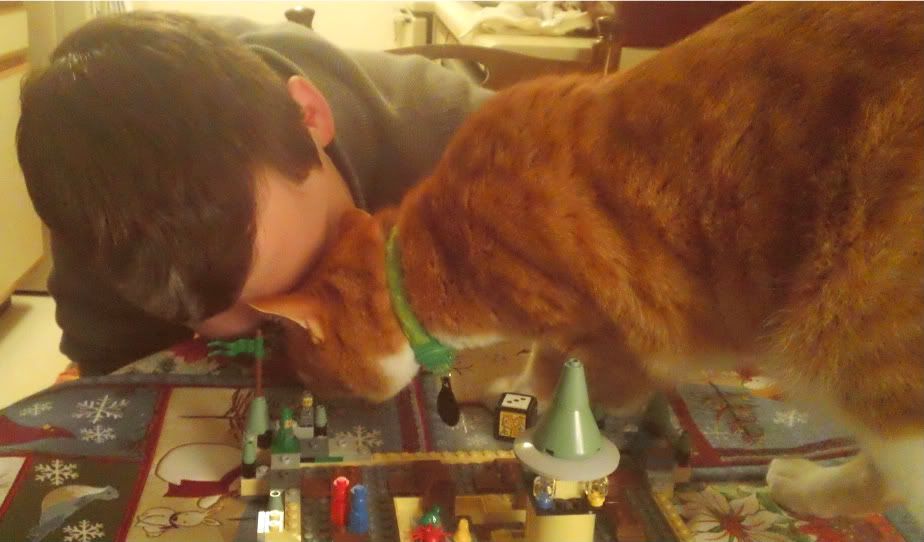
Hobbes helping Nathan play our new Hogwarts Lego game.
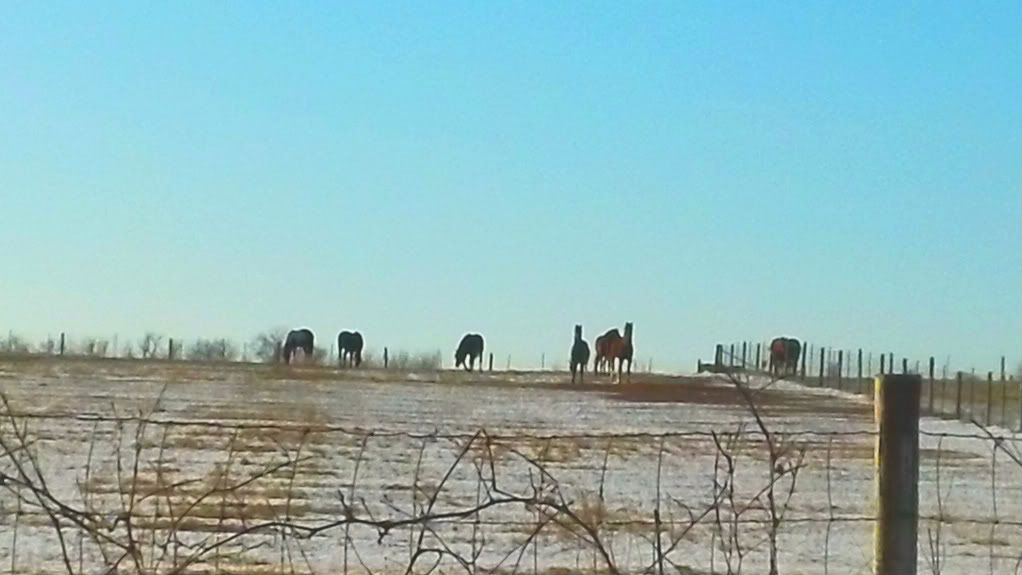
Horses watching me as I drive to work. Don't worry, I stopped the car for the shot. :)
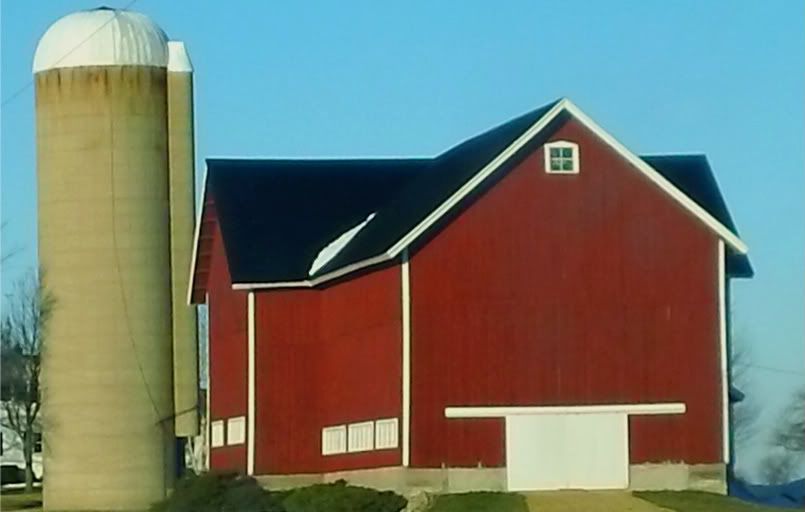
Barns are so photogenic.
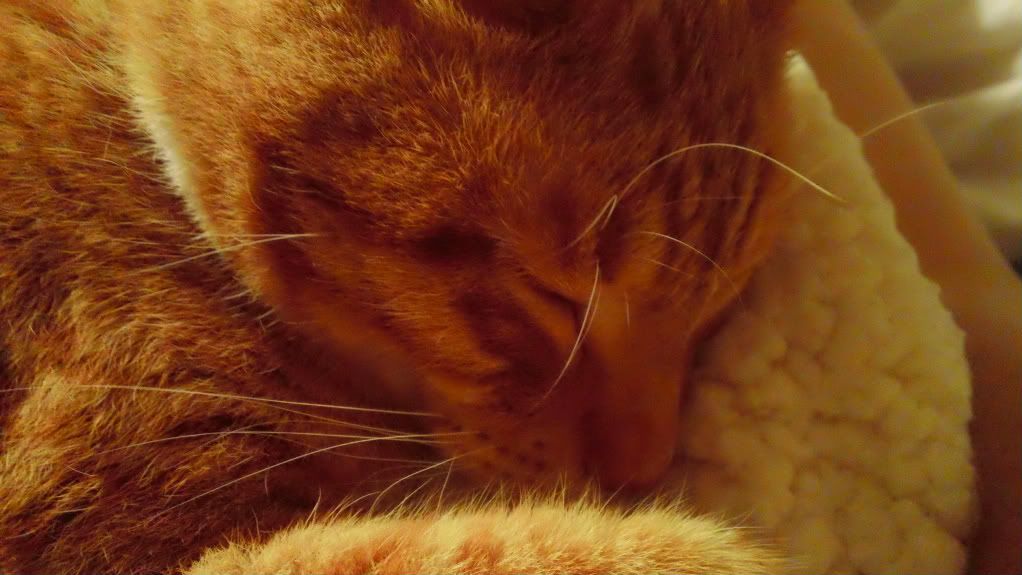
Hobbes says "Good night."
Whew.. it feels wonderful to be blogging again. Even though it's time consuming and sometimes I can't think of what to write, the act of sitting at my desk in my pajamas, typing on my laptop while my husband tries to get the cat to stop clawing the couch is so satisfying. I always feel scholarly when I sit down to write my blog- I imagine myself back at school, cranking out history papers. Or I let my imagination wander as I create something out of nothing- I am Hermione Granger finishing an essay in the Gryffindor common room; Emily Dickinson, pacing her room in Amherst as words drop into her mind; or a monk in a scriptorium in medieval Ireland, reverently copying Scripture verses onto vellum. Ever since language was created, man (and woman) has had the need... no, the urge... to write. Like art and music, it is a great universal constant, regardless of time and place, language and culture. We breathe words and language every day- how natural that we should want to add our own words to the mix. I find it amazing how much power words have. First of all, they are immortal- one of the only things that survives when we do not. I am reminded of this every day at work when I read articles and letters by people whose bodies now rest in the earth. As I read their words... words they created... they continue to exist for a little while. It's beautiful really... and it's part of the reason I love what I do. I can learn so much from others' perspectives- from Rilke, Barbara Kingsolver, or even a letter to the editor from 1922.
I have always found that the best writers tend to be readers. Sure, it's helpful to know the definition of an adverb. Conjugating sentences can even be kind of fun (don't judge me). But learning about plot development and sentence structure and word choice in English class does nothing to create a good writer. Reading is the best way to learn how to write, just as watching someone demonstrate a skill is the best way to learn. (Try learning how to crochet from a book. It's hard.) I could preach until dawn about how reading broadens our minds, exposes us to new things, feeds our imagination, teaches us, challenges our deepest beliefs and prejudices. But there's something else that reading does. It allows us to articulate our emotions and our deepest thoughts in writing. Not all of us can publish books. Not many of us could make writing into a career. But when we write, we feed our soul for a little while. We contribute something to the world. We prove, through our own words, that we exist and we matter and we need to be heard. Because we read, we not only know how to express ourselves, but we also have a desire to.
I've discovered in the past two weeks how desperately I love writing this blog. And I will try fervently not to go this long again without sitting down to my keyboard. I have so much to write about the books I read lately, especially Sarah's Key and Lolita, as well as thoughts on libraries and the digital age that are still brewing within me. I'll be back soon. Here are some pictures that show a little glimpse of life lately....

Hobbes helping Nathan play our new Hogwarts Lego game.

Horses watching me as I drive to work. Don't worry, I stopped the car for the shot. :)

Barns are so photogenic.

Hobbes says "Good night."
Thursday, January 12, 2012
Geometrically Progressive
Currently Reading: America's Resting Place: 400 Years of History Through Our Cemeteries and Burial Grounds by Marilyn Yalom
I read The Guernsey Literary and Potato Peel Pie Society in two days. It was that good.
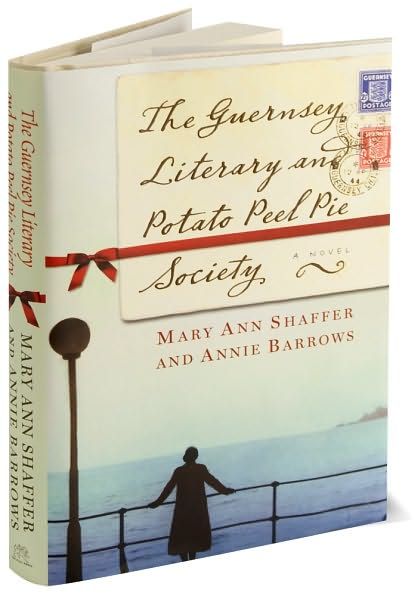
After David Copperfield, I needed a quick, light read and this fit the bill perfectly. It had received glowing reviews from my sister-in-law, aunt,and coworker, so I knew I would enjoy it. To be quite honest though, I feel it is a book best read outside in the summertime, when the leaves are whispering and one can run through the grass, not during the cold dead of winter; maybe I'll just have to pick it up again in several months when the time feels right!
The book is, overall, about the saving grace of books and reading. Each character, living through traumatic and challenging times during the German Occupation in WWII, found books that spoke to them and helped them cope, even survive. It was fascinating to read how farmers and fisherman leaned on Oscar Wilde, Charles Lamb, and Seneca during food shortage, evacuations, and terror. I have always believed in the inherent power of books to change us, to change the world. This book exemplified my most fervent beliefs. We read for pleasure and enjoyment, it is true. Yet the effect books can have on us goes beyond mere entertainment. Books have the power to build us up, depress us, change the world, destroy it. They inspire us to change our lives, our perspectives, and even to lead us down new paths with new interests. They challenge us to get outside our comfort zones and address truths we didn't even know existed. I will forever be passionate about books, for they lead to everything else.
Since I am short on time today, I merely want to leave you with some of the book's most profound quotes that state, in a deeply elegant way, the power and lure of books in our lives.
"Perhaps there is some secret sort of homing instinct in books that brings them to their perfect readers. How delightful if that were true."
"Reading good books ruins you for enjoying bad books." (Hehe)
And the best for last: "That's what I love about reading: one tiny thing will interest you in a book, and that tiny thing will lead you onto another book, and another bit there will lead you onto a third book. It's geometrically progressive- all with no end in sight, and for no other reason than sheer enjoyment."
I hope you get time to lose yourself in a book this weekend. And I'm curious to know: how have books changed you? Happy reading!
I read The Guernsey Literary and Potato Peel Pie Society in two days. It was that good.

After David Copperfield, I needed a quick, light read and this fit the bill perfectly. It had received glowing reviews from my sister-in-law, aunt,and coworker, so I knew I would enjoy it. To be quite honest though, I feel it is a book best read outside in the summertime, when the leaves are whispering and one can run through the grass, not during the cold dead of winter; maybe I'll just have to pick it up again in several months when the time feels right!
The book is, overall, about the saving grace of books and reading. Each character, living through traumatic and challenging times during the German Occupation in WWII, found books that spoke to them and helped them cope, even survive. It was fascinating to read how farmers and fisherman leaned on Oscar Wilde, Charles Lamb, and Seneca during food shortage, evacuations, and terror. I have always believed in the inherent power of books to change us, to change the world. This book exemplified my most fervent beliefs. We read for pleasure and enjoyment, it is true. Yet the effect books can have on us goes beyond mere entertainment. Books have the power to build us up, depress us, change the world, destroy it. They inspire us to change our lives, our perspectives, and even to lead us down new paths with new interests. They challenge us to get outside our comfort zones and address truths we didn't even know existed. I will forever be passionate about books, for they lead to everything else.
Since I am short on time today, I merely want to leave you with some of the book's most profound quotes that state, in a deeply elegant way, the power and lure of books in our lives.
"Perhaps there is some secret sort of homing instinct in books that brings them to their perfect readers. How delightful if that were true."
"Reading good books ruins you for enjoying bad books." (Hehe)
And the best for last: "That's what I love about reading: one tiny thing will interest you in a book, and that tiny thing will lead you onto another book, and another bit there will lead you onto a third book. It's geometrically progressive- all with no end in sight, and for no other reason than sheer enjoyment."
I hope you get time to lose yourself in a book this weekend. And I'm curious to know: how have books changed you? Happy reading!
Saturday, January 7, 2012
Homesick for Books
Currently Reading: Nothing. Really. (But not for long. Give me about one hour... I have two waiting on my desk.) :)
It is true. I am currently not reading anything, unless you count my Mary Jane's Farm magazine, which has already gotten me excited about growing some vegetables on the balcony this spring.. even though it is only the beginning of January and I have some waiting to do. Sigh.
There are several reasons why I have not started a new book lately: someone checked out the book at the library I wanted, I had to wait for a book I ordered through Inter-Library Loan, but most of all: I am homesick.
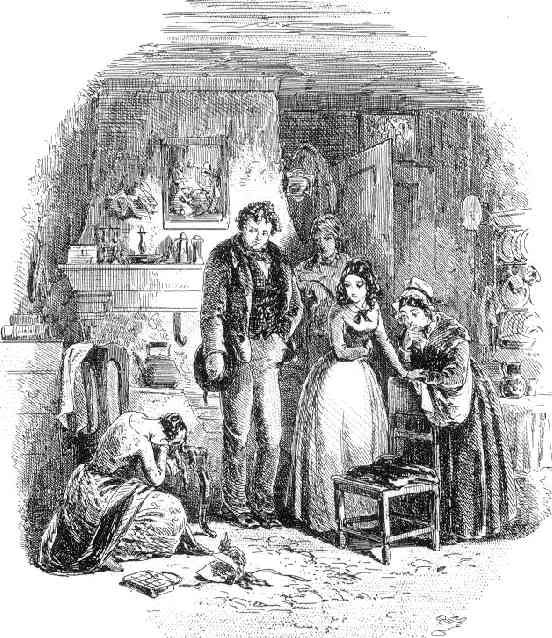
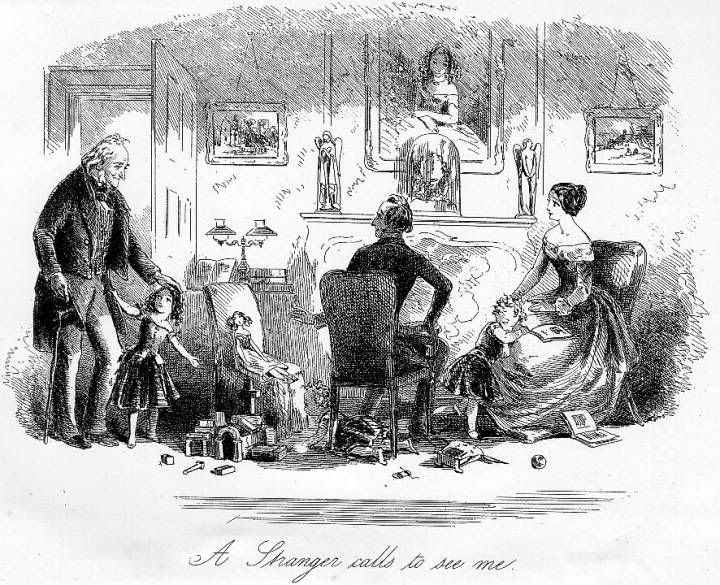
Homesick for David Copperfield. I finished it about three days ago and although I loved it (or perhaps because I loved it so), it lingers with me still. At work on Thursday, while shelving books, I thought about a certain scene in the novel and smiled, thinking of going home to read more. That's when it hit me: I finished it. It was over. There was nothing more of it. I literally almost cried while shelving orange dots in the Children's Spanish section on a Thursday afternoon because of the stark realization that 741 pages had not been enough and I wanted more.
Several weeks ago, during an impromptu little meeting with some other literary-minded individuals, someone stated the mark of a good book is that "when it is over, you are left with a sense of emptiness." I was struck by this comment, because through all of my literary wanderings, I have always found this to be true. The best books- the ones I reread and cherish the most- are the ones that have left me with the dull ache of leaving home and missing the ones I love when I have finished them.
I have experienced this before- I'm sure you all have. There is a certain book that, as you read it, becomes different from others you have read. You get so wrapped up into the plot, the characters, the scenery, that you start to feel as though it is real and you are a part of it. You stop merely reading- you start living within the page. You ignore everything else around you while you are reading, while your thoughts remain on nothing else when you are not. This heightened form of reading is beautiful and unique; it is the reason why I read. Yet it always ends with a feeling of emptiness, a sense of letdown as you close the book and return it to the shelf, for your journey is over and you must say farewell to the characters you have observed and spoken with.
Thus am I left with a feeling of homesickness for Yarmouth, Mr. Peggotty's boat, Mr. Wickfield's house, and all of the fascinating characters I have had the privilege of knowing this past month. It is with a heavy sigh I return the book to the library, although I have no doubt I will visit it occasionally as I walk through the stacks. Nor am I the only one who sets David Copperfield aside with a heavy heart. In the preface to David Copperfield, Mr. Dickens wrote "It would concern the reader little, perhaps, to know how sorrowfully the pen is laid down at the close of a two-years' imaginative task; or how an Author feels as if he were dismissing some portion of himself into the shadowy world, when a crowd of the creatures of his brain are going from him for ever." Don't you love that sentence? In these words, one feels his own triumph mingling with reluctance and regret. How much harder it must be for the writer than the reader to let go of a book; I do not envy him that feeling. (How I wish there was a recording of his voice- I imagine it deep, melodic, and exquisitely rapturous. A man who writes like that could have no other voice, in my opinion.)
Yet unlike real trips or meetings and partings, those in the book world are always able to be relived. I can return to a myriad of places and revisit literary friends throughout my entire life. No doubt I will cross the threshold into David Copperfield again. And I have many other social calls to make in the literary world, with new introductions as well as joyful reunions. While the homesickness does leave eventually, the impact of a good book never does. For that, I am forever grateful.
It is true. I am currently not reading anything, unless you count my Mary Jane's Farm magazine, which has already gotten me excited about growing some vegetables on the balcony this spring.. even though it is only the beginning of January and I have some waiting to do. Sigh.
There are several reasons why I have not started a new book lately: someone checked out the book at the library I wanted, I had to wait for a book I ordered through Inter-Library Loan, but most of all: I am homesick.
Homesick for David Copperfield. I finished it about three days ago and although I loved it (or perhaps because I loved it so), it lingers with me still. At work on Thursday, while shelving books, I thought about a certain scene in the novel and smiled, thinking of going home to read more. That's when it hit me: I finished it. It was over. There was nothing more of it. I literally almost cried while shelving orange dots in the Children's Spanish section on a Thursday afternoon because of the stark realization that 741 pages had not been enough and I wanted more.
Several weeks ago, during an impromptu little meeting with some other literary-minded individuals, someone stated the mark of a good book is that "when it is over, you are left with a sense of emptiness." I was struck by this comment, because through all of my literary wanderings, I have always found this to be true. The best books- the ones I reread and cherish the most- are the ones that have left me with the dull ache of leaving home and missing the ones I love when I have finished them.

I have experienced this before- I'm sure you all have. There is a certain book that, as you read it, becomes different from others you have read. You get so wrapped up into the plot, the characters, the scenery, that you start to feel as though it is real and you are a part of it. You stop merely reading- you start living within the page. You ignore everything else around you while you are reading, while your thoughts remain on nothing else when you are not. This heightened form of reading is beautiful and unique; it is the reason why I read. Yet it always ends with a feeling of emptiness, a sense of letdown as you close the book and return it to the shelf, for your journey is over and you must say farewell to the characters you have observed and spoken with.
Thus am I left with a feeling of homesickness for Yarmouth, Mr. Peggotty's boat, Mr. Wickfield's house, and all of the fascinating characters I have had the privilege of knowing this past month. It is with a heavy sigh I return the book to the library, although I have no doubt I will visit it occasionally as I walk through the stacks. Nor am I the only one who sets David Copperfield aside with a heavy heart. In the preface to David Copperfield, Mr. Dickens wrote "It would concern the reader little, perhaps, to know how sorrowfully the pen is laid down at the close of a two-years' imaginative task; or how an Author feels as if he were dismissing some portion of himself into the shadowy world, when a crowd of the creatures of his brain are going from him for ever." Don't you love that sentence? In these words, one feels his own triumph mingling with reluctance and regret. How much harder it must be for the writer than the reader to let go of a book; I do not envy him that feeling. (How I wish there was a recording of his voice- I imagine it deep, melodic, and exquisitely rapturous. A man who writes like that could have no other voice, in my opinion.)
Yet unlike real trips or meetings and partings, those in the book world are always able to be relived. I can return to a myriad of places and revisit literary friends throughout my entire life. No doubt I will cross the threshold into David Copperfield again. And I have many other social calls to make in the literary world, with new introductions as well as joyful reunions. While the homesickness does leave eventually, the impact of a good book never does. For that, I am forever grateful.

Sunday, November 13, 2011
Imagination is a Powerful Thing
Currently Reading: Boone County Then and Now, Harry Potter and the Order of the Phoenix by J.K. Rowling, and The Dovekeepers by Alice Hoffman (I love you, Ms. Hoffman!)
Hello everyone! I'm sorry for the sudden departure from the blog for the past two weeks, but many things have had to take precedence (work, family emergency, etc.) to this wonderful project of mine. But I am back with so much to talk about! I actually had to run ideas past Nathan this afternoon because I could not decide on which topic I wanted to expound upon first.
I finished the Book Lust books, which were eye-opening, inspiring, and resulted in many additions to my "Must Read" list. I believe I am now on 89 books that I want to read or reread.... I pray that God gives me a long life so that I get the chance to indulge in all of the book-worlds and meet all of the characters I wish!
Today, I feel like discussing imagination, a precious and life-altering substance as real and necessary to our well being as our souls. I have been thinking about the power of imagination lately, as I reflect on my childhood and dive into both old and new novels. The imagination and books work together simultaneously; you cannot have one without the other. Reading, enveloping oneself within another world or another time, among strange and marvelous new people, stimulates the imagination. But it is our imagination that gives life and voice to paragraphs and sentences printed in ink. They work in conjunction, bettering our lives in every way.
I have consistently relied upon my imagination throughout my life- it is my sincere belief that it is from our soul that our imagination springs and thrives and that, like flames licking logs, our imagination grows with our exposure to literature. Because of my imagination, I fell head over heels in love with reading. Narnia, Frell, or Civil War-era America would never have changed my life like they did without the pictures that my imagination conjured within my mind. When I was a girl, I finished my homework by pretending I was studying in the Gryffindor common room at Hogwarts; I remember pretending to have conversations with some of my favorite literary characters; my sister and I acted out our favorite books. I imagined what it was like to be Anne of Green Gables, Caddie Woodlawn, Laura Ingalls Wilder, Jo March, Hermione Granger, and I aspired to live up to their examples. As an adult, I can still revisit the places of my childhood, or broaden my life experiences without leaving my living room. I can have coffee with Clare and Henry in downtown Chicago, discussing time in all of its intricacies; contemplate death and sacrifice in the little village of Eyam in the 1600s; or witness desperation as Ethan Frome and Mattie sail down the hill on a sled. All of this speaks to me, teaches me, and feeds my imagination.
Oh, do I love that line. And this one too: "I have a real issue with anyone trying to protect children from their own imaginations." This quote, from none other than the phenomenal and imaginative J.K. Rowling, echoes my own love and respect for the power of imagination in a child's life. This is why I feel so strongly against banned books, against trying to stifle or keep children away from the powerful and evocative world of literature. A vibrant imagination is everything. And I plan on continuing to let mine grow. It is amazing what our minds are capable of.... and how much better our lives are because of the books we surround ourselves with.
Happy reading... I hope you have fun feeding your imagination this week!
Hello everyone! I'm sorry for the sudden departure from the blog for the past two weeks, but many things have had to take precedence (work, family emergency, etc.) to this wonderful project of mine. But I am back with so much to talk about! I actually had to run ideas past Nathan this afternoon because I could not decide on which topic I wanted to expound upon first.
I finished the Book Lust books, which were eye-opening, inspiring, and resulted in many additions to my "Must Read" list. I believe I am now on 89 books that I want to read or reread.... I pray that God gives me a long life so that I get the chance to indulge in all of the book-worlds and meet all of the characters I wish!
Today, I feel like discussing imagination, a precious and life-altering substance as real and necessary to our well being as our souls. I have been thinking about the power of imagination lately, as I reflect on my childhood and dive into both old and new novels. The imagination and books work together simultaneously; you cannot have one without the other. Reading, enveloping oneself within another world or another time, among strange and marvelous new people, stimulates the imagination. But it is our imagination that gives life and voice to paragraphs and sentences printed in ink. They work in conjunction, bettering our lives in every way.
I have consistently relied upon my imagination throughout my life- it is my sincere belief that it is from our soul that our imagination springs and thrives and that, like flames licking logs, our imagination grows with our exposure to literature. Because of my imagination, I fell head over heels in love with reading. Narnia, Frell, or Civil War-era America would never have changed my life like they did without the pictures that my imagination conjured within my mind. When I was a girl, I finished my homework by pretending I was studying in the Gryffindor common room at Hogwarts; I remember pretending to have conversations with some of my favorite literary characters; my sister and I acted out our favorite books. I imagined what it was like to be Anne of Green Gables, Caddie Woodlawn, Laura Ingalls Wilder, Jo March, Hermione Granger, and I aspired to live up to their examples. As an adult, I can still revisit the places of my childhood, or broaden my life experiences without leaving my living room. I can have coffee with Clare and Henry in downtown Chicago, discussing time in all of its intricacies; contemplate death and sacrifice in the little village of Eyam in the 1600s; or witness desperation as Ethan Frome and Mattie sail down the hill on a sled. All of this speaks to me, teaches me, and feeds my imagination.
 |
| Anne says it best: "It just makes me feel glad to be alive—it’s such an interesting world. It wouldn’t be half so interesting if we knew all about everything, would it? There’d be no scope for imagination then, would there?” |
Happy reading... I hope you have fun feeding your imagination this week!
Tuesday, October 11, 2011
Comfy Cozy
Currently Reading: Daughters of the Witching Hill by Mary Sharratt
As the weather turns colder and the leaves begin swirling down to the ground below, my thoughts often turn to feelings of "coziness." I'm sure I'm not the only one who loves to envision all of the little things that make me feel cozy, warm, and snuggly: mugs of tea or lattes with steam gently floating upwards; warm, over-large fleece blankets; snuggling with my husband and kitty; hot baths; crackling fires in the fireplace; hot bowls of homemade soup and bread; and curling up on the couch or in bed with a great book.
What is it about books that give us that "comfy" feeling? Is it because reading is not only a mental experience, but also a physical one? Is it because our souls squirm with pleasure at the thought of a long afternoon with a beloved book? Is it because licking our fingers, turning the pages, cracking the spines, and smelling the ink of a book is so satisfying? Perhaps it's all of these things.
Both the idea and act of reading provides me with a sense of calm, of balance, and of warmth. Reading is a full-body experience that I look forward to with pleasure. I am complete when I am buried in a book, nestled in a squishy couch and a soft blanket, with a mug of something warm by my side. It's even better when I can sit near a window and gaze out at the world occasionally, especially if it is cold, snowy, windy, or rainy outside. My "cozy" factor is enhanced by the contrast of a cold and raging natural world just beyond the window. Granted, I don't save reading for those cozy moments alone. I read whenever and wherever I can- in the waiting room, before work, while cooking, and even while walking around. Yet I don't think it is a coincidence that the saying goes "curling up with a good book." With a book in hand, I cannot stave off the overwhelming urge to snuggle and cozy up to it, loving it in my own special way and giving my soul another dose of "happy." Maybe the only way to truly enjoy a book and wholeheartedly engage in the sacred art of reading, is to literally curl up with one's book.
Have a great week.... now go find a book to cuddle with! :)
As the weather turns colder and the leaves begin swirling down to the ground below, my thoughts often turn to feelings of "coziness." I'm sure I'm not the only one who loves to envision all of the little things that make me feel cozy, warm, and snuggly: mugs of tea or lattes with steam gently floating upwards; warm, over-large fleece blankets; snuggling with my husband and kitty; hot baths; crackling fires in the fireplace; hot bowls of homemade soup and bread; and curling up on the couch or in bed with a great book.
 |
| What is cozier than a cat amid books? |
 |
Have a great week.... now go find a book to cuddle with! :)
Monday, September 19, 2011
Fingerprints
Currently Reading: Cleopatra: A Life by Stacy Schiff and Mary Jane magazine
Good morning, fellow bookworms! It is a rainy Monday- the perfect time to curl up under a blanket with a good book. As you can see, I am still working on Cleopatra, although I am almost finished. Because October is coming up quickly (hence, I will read my "Halloween-themed" books... I promise to give you my best Halloween book list on October 1st), I don't want to start on anything too long. Methinks a People of the Book reread might be in order.
Unfortunately, this post will have to be in two parts today. I must start getting ready for work in a bit, so tonight I will give you my list and descriptions of my top ten favorite books... although whittling my books down to only ten might be a little too difficult. We'll see how that goes. For now, I want to muse on what exactly makes a book a "favorite book." When asked why a particular book (usually Jane Eyre) is my favorite, I tend to launch into a rambling discussion of the main heroine and the amazingly complex plot and the growth in the characters that makes me love them all the more. Yet I never feel as if my words accurately portray what exactly makes me collect copies obsessively and read segments of it as I get my hair done for my wedding. (And yes, this is all true...how obvious is it at this point that Jane Eyre is my favorite?) When we try defining why a book is our "favorite", launching into character descriptions and book summaries does not really do it justice. I believe it's difficult to describe how a book affects us, precisely because there are no words that suffice. How can I adequately describe (without sounding insane) the multiplicity of good feelings I get when I hold the book in my hand? How to relate the anticipation I get when cracking it open for its millionth read? How do I convey the satisfaction and release I get as I sink into its familiar pages? How can I make someone understand that no matter how many times I read it, there is always something new to discover? Perhaps there is no reason to define it. It is simply enough to say, "It is my favorite" and trust that the person to whom we are talking will understand the complexity and passion behind that statement.
I love to hear about others' favorite books. It makes me happy- in an "I love opportunities" kind of way- that so many amazing books exist in this world for us as readers to love, to hate, to be indifferent to. I love that although we are bound together by a love of books and reading, we are also very different in our tastes, evident as I gaze around a library or bookstore, witnessing how unique we are all created to be. No one's "top ten" is ever exactly the same. Nobody's bookshelf holds exactly the same volumes. Our book collections are like our fingerprints- unique to us alone, making us stand apart from the crowd. And I LOVE that.
Subscribe to:
Posts (Atom)
Keep On Reading...
