Currently Reading: The Red-Haired Girl from the Bog by Patricia Monaghan and The Obituary Writer by Ann Hood
A quick pop-in! Three things:
I encourage you to check out my new essay published on the Literary Ladies Guide website, discussing nature in Anne of Green Gables. Here's the link: http://www.literaryladiesguide.com/literary-musings/beyond-beauty-the-natural-world-in-anne-of-green-gables/#more-1690
I'm just starting to get into this "writing-outside-my-blog" thing and I would really love to hear some feedback, so feel free to comment!
~~~~~~~~~~~~~~~~~~~~
Last week, I finished Life After Life by Kate Atkinson, which is probably the best novel I have read so far this year. It was mindblowing. And very difficult to describe, so I won't even attempt it. I can give you a glimpse, however, of the thoughts it raised in my mind as I read: how fragile and powerful are the trajectories of our lives; the pull and tug between free will and choice as the book dipped and flung itself into both; the ponderous, unanswerable questions of life and death and outcomes and consequences and the implications of our lives on the world, on each other, on history. How little things might lead to broader implications. How new decisions might still yield the same result. How little control we have over our destinies. How much control we have over our destinies. Life After Life was exquisite.
~~~~~~~~~~~~~~~~~~~~
Also finished The Selected Letters of Louisa May Alcott. (Can you tell I'm on break from school?) The letters, like the journals, were such a pleasure because I felt fully immersed in LMA's world, her voice, her perspective. I actually enjoyed the Letters more because they were more conversational and detailed- often, I felt like Louisa was just talking to me, describing her thoughts and her doings. Like Louisa, the words were fresh and vibrant, as if they were written yesterday. I feel a deeper connection to Louisa the more I read of her, and these Letters strengthened that connection intensely. In fact, having read collections of both her Letters and Journals, I feel like I know her intimately, as a friend, as a kindred spirit. She is more real to me now than ever before.
~~~~~~~~~~~~~~~~~~~~
So, a good May overall. June stretches before us, ripe with the promise of farmer's markets, museum visits, long walks, and a weekend vacation with friends up North. Books in the queue: In the Shadow of Blackbirds, some Ralph Waldo Emerson, Shadowfell, and Mrs. Dalloway. School starts again in two weeks, but I'm not focusing on that yet. My focus is on the good ahead.
Showing posts with label Classics Club. Show all posts
Showing posts with label Classics Club. Show all posts
Wednesday, May 29, 2013


Monday, April 1, 2013
Bits and Pieces
Currently Reading: The Journals of Louisa May Alcott
Bits and pieces of the last two weeks:
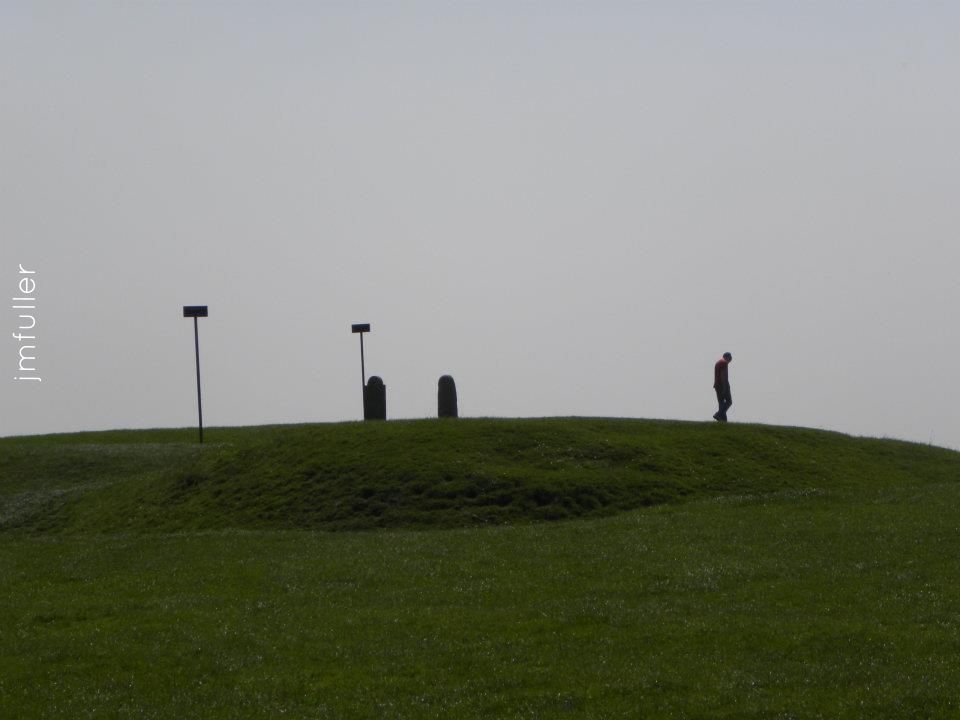
Spring break came and went, which allowed me to find time to read and finish my third Classics Club book, Early Irish Myths and Sagas by Jeffrey Gantz and my fourth Alice Hoffman, The Third Angel. Myths and Sagas took me almost two months, despite its small size. I have read much of the early Irish literature before, and each time it is hard to get through. Not because it's boring or uninteresting, but because each story is thick with detail and description. It is tempting to skim these tales, letting my eyes flick over the lines of names and places that are mostly unpronounceable. But when I take time to notice and study them, the words and names become so beautiful. I practice sounding them out, checking with the Irish pronunciation guide at the front of the book and smiling with pride when I remember some of the more difficult ones from previous readings. The tales also expand and broaden under my eyes when I savor them slowly. Descriptions of Cu Chulaind's shield or the house Bricriu builds can be tedious, but I try to read them for the history they portray, as much as for the storylines. "The Exile of the Sons of Uisliu" is still my favorite, closely followed by "The Dream of Oengus." (Both tales were the basis of some great Irish Literary Revival works too; long ago, the discovery of Yeats' poem "The Song of Wandering Aengus" began my fascination with all things Irish.) Ever since we returned from Ireland last year, I find that in each Irish book I read, I can picture what I read so much clearer. I know what the Hill of Tara looks like; I can see the deep woods and the crashing ocean foam in my mind as the words take me back to a place I fell in love with, that lives in me still.
As for The Third Angel? Alice Hoffman continues to amaze me. I don't know how much more needs to be said.
~~~~~~~~~~~~~~~~~~~~~~
Easter weekend, filled with family and prayers and gratitude to God. Good Friday was everything it should be: solemn, tear-filled, hushed, holy. With each light that is extinguished in the sanctuary, I am shocked anew by the raw and the sacred of the night. I left exhausted, utterly spent by the sheer emotion of marking a sacrifice.
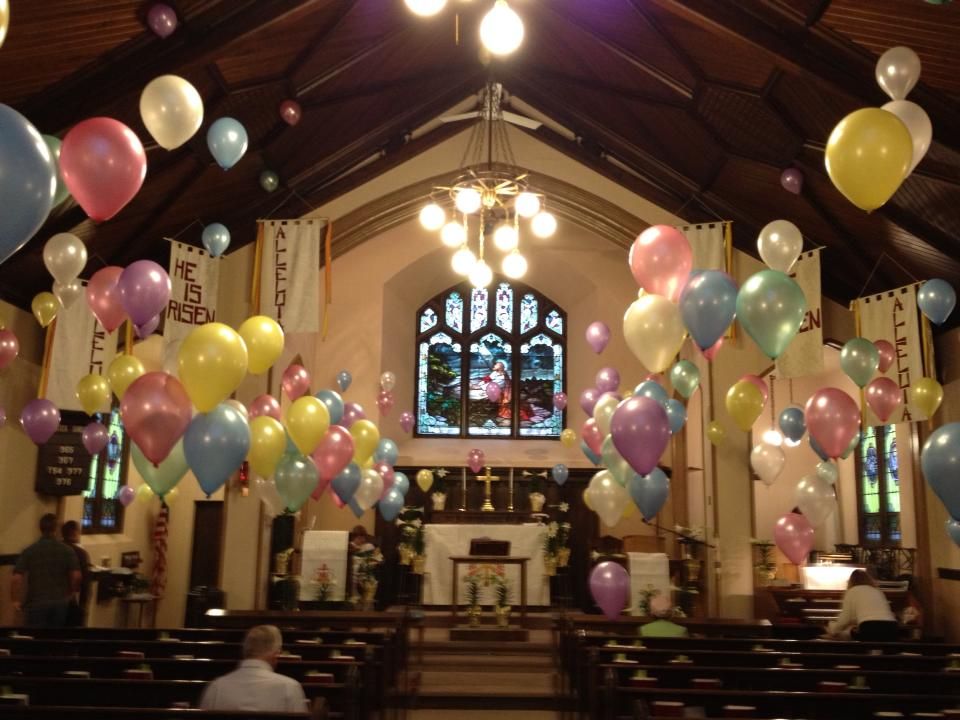
But this is what our church looked like Sunday morning. (Courtesy of Pastor Robert). I would say that a balloon-filled sanctuary is the epitome of Easter celebration and joy.
~~~~~~~~~~~~~~~~~
I swept through Wanderlust by Elisabeth Eaves in only a few days, satisfying the traveling itch that has engulfed me with the first whispers of spring. At first I worried that, far from putting calamine lotion on the itch, it would only irritate it, making me long to leave and fly to new adventures. But the memoir was brutally honest, portraying the good and the bad of ceaseless travel in equal measures. Through the book, I relived the feelings I experienced in Ireland last May: the exhilarating, terrifying feeling of being a stranger among strangers; the awe of gazing upon beauty I could only have dreamed of; the self-consciousness that accompanies being dropped into a new culture; and the fulfillment of desires for adventure, culture, and knowledge. But Wanderlust did not shy away from the reality that constant movement is not always the answer; downfalls exist for those who can never find happiness in settling, who must always be moving in order to feel alive. And I was truly grateful, after reading it, that I am satisfied with the realities of schedules and routine, and that I don't have to be somewhere else to be fulfilled personally and creatively. The travel itch is still there but that calamine lotion felt good.
~~~~~~~~~~~~~~~~~~~
Seed planting. With great trepidation, I might add. Spinach and two types of tomatoes. Since I've never started plants from seeds before, I'm nervous that I will inadvertently do something wrong; seeds and seedlings seem so fragile and every gardening website tells you something different to do. I feel so confident in the kitchen (most of the time) but I have no confidence in my gardening ability yet. But I'm glad I've tried- we'll see what becomes of it. Hobbes enjoyed himself that morning, watching over the plants and basking in the sunshine with them.
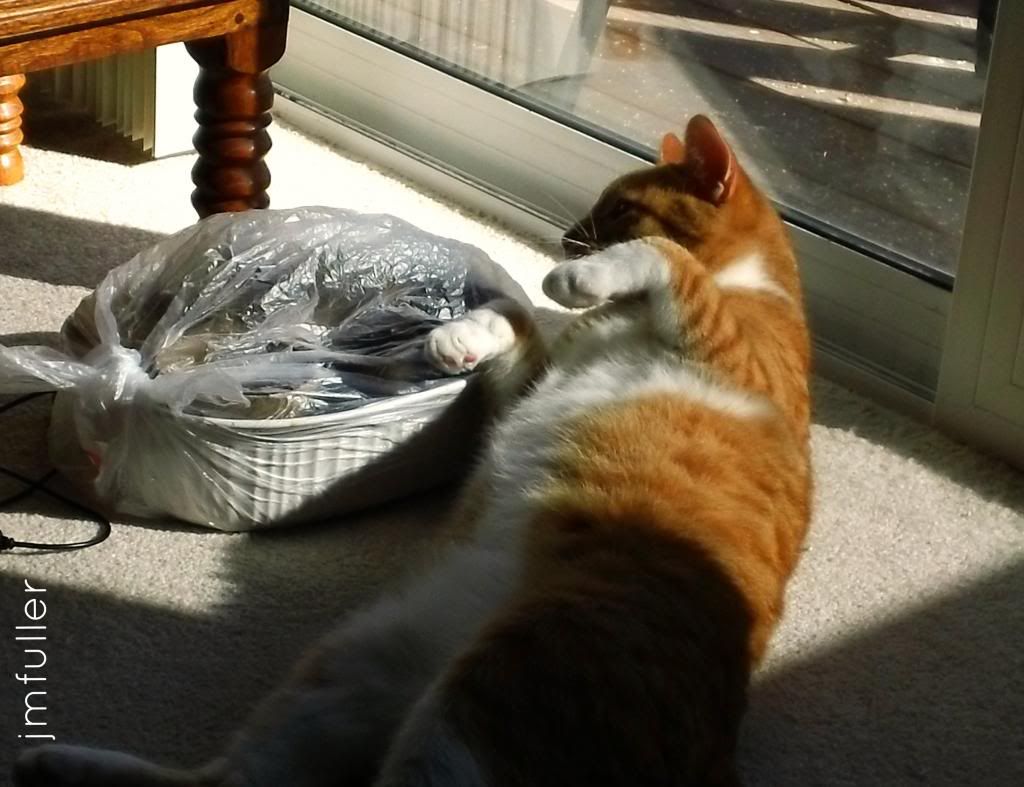
Wait until his cat grass starts to grow. He'll be ecstatic.
~~~~~~~~~~~~~~~~~~~~~~~~~~~
Finally, some exciting news (for me) that I'm hesitant to share yet but will anyway because when something keeps you up all night with excitement, it's good to share it. I will be contributing a post from this blog on The Ladies' Literary Guide website; they contacted me yesterday about printing it on their site. (By the way, this website, which I was already familiar with, is truly fascinating for anyone interested in classic female writers. Definitely check it out.) Only in the past several months have I thought about spreading my writing beyond the borders of this blog, but it has still only been a thought in the back of my head until now. (Louisa May Alcott may have been an inspiration). I don't know what will come of it, but the excitement is there nevertheless, as well as further inspiration and desire to focus on my writing.
Happy Monday!
Bits and pieces of the last two weeks:
Spring break came and went, which allowed me to find time to read and finish my third Classics Club book, Early Irish Myths and Sagas by Jeffrey Gantz and my fourth Alice Hoffman, The Third Angel. Myths and Sagas took me almost two months, despite its small size. I have read much of the early Irish literature before, and each time it is hard to get through. Not because it's boring or uninteresting, but because each story is thick with detail and description. It is tempting to skim these tales, letting my eyes flick over the lines of names and places that are mostly unpronounceable. But when I take time to notice and study them, the words and names become so beautiful. I practice sounding them out, checking with the Irish pronunciation guide at the front of the book and smiling with pride when I remember some of the more difficult ones from previous readings. The tales also expand and broaden under my eyes when I savor them slowly. Descriptions of Cu Chulaind's shield or the house Bricriu builds can be tedious, but I try to read them for the history they portray, as much as for the storylines. "The Exile of the Sons of Uisliu" is still my favorite, closely followed by "The Dream of Oengus." (Both tales were the basis of some great Irish Literary Revival works too; long ago, the discovery of Yeats' poem "The Song of Wandering Aengus" began my fascination with all things Irish.) Ever since we returned from Ireland last year, I find that in each Irish book I read, I can picture what I read so much clearer. I know what the Hill of Tara looks like; I can see the deep woods and the crashing ocean foam in my mind as the words take me back to a place I fell in love with, that lives in me still.

As for The Third Angel? Alice Hoffman continues to amaze me. I don't know how much more needs to be said.
~~~~~~~~~~~~~~~~~~~~~~
Easter weekend, filled with family and prayers and gratitude to God. Good Friday was everything it should be: solemn, tear-filled, hushed, holy. With each light that is extinguished in the sanctuary, I am shocked anew by the raw and the sacred of the night. I left exhausted, utterly spent by the sheer emotion of marking a sacrifice.
But this is what our church looked like Sunday morning. (Courtesy of Pastor Robert). I would say that a balloon-filled sanctuary is the epitome of Easter celebration and joy.

~~~~~~~~~~~~~~~~~
I swept through Wanderlust by Elisabeth Eaves in only a few days, satisfying the traveling itch that has engulfed me with the first whispers of spring. At first I worried that, far from putting calamine lotion on the itch, it would only irritate it, making me long to leave and fly to new adventures. But the memoir was brutally honest, portraying the good and the bad of ceaseless travel in equal measures. Through the book, I relived the feelings I experienced in Ireland last May: the exhilarating, terrifying feeling of being a stranger among strangers; the awe of gazing upon beauty I could only have dreamed of; the self-consciousness that accompanies being dropped into a new culture; and the fulfillment of desires for adventure, culture, and knowledge. But Wanderlust did not shy away from the reality that constant movement is not always the answer; downfalls exist for those who can never find happiness in settling, who must always be moving in order to feel alive. And I was truly grateful, after reading it, that I am satisfied with the realities of schedules and routine, and that I don't have to be somewhere else to be fulfilled personally and creatively. The travel itch is still there but that calamine lotion felt good.
~~~~~~~~~~~~~~~~~~~
Seed planting. With great trepidation, I might add. Spinach and two types of tomatoes. Since I've never started plants from seeds before, I'm nervous that I will inadvertently do something wrong; seeds and seedlings seem so fragile and every gardening website tells you something different to do. I feel so confident in the kitchen (most of the time) but I have no confidence in my gardening ability yet. But I'm glad I've tried- we'll see what becomes of it. Hobbes enjoyed himself that morning, watching over the plants and basking in the sunshine with them.

Wait until his cat grass starts to grow. He'll be ecstatic.
~~~~~~~~~~~~~~~~~~~~~~~~~~~
Finally, some exciting news (for me) that I'm hesitant to share yet but will anyway because when something keeps you up all night with excitement, it's good to share it. I will be contributing a post from this blog on The Ladies' Literary Guide website; they contacted me yesterday about printing it on their site. (By the way, this website, which I was already familiar with, is truly fascinating for anyone interested in classic female writers. Definitely check it out.) Only in the past several months have I thought about spreading my writing beyond the borders of this blog, but it has still only been a thought in the back of my head until now. (Louisa May Alcott may have been an inspiration). I don't know what will come of it, but the excitement is there nevertheless, as well as further inspiration and desire to focus on my writing.
Happy Monday!
Sunday, February 24, 2013
In Villette
Currently Reading: Early Irish Myths and Sagas by Jeffrey Gantz, Under Wildwood by Colin Meloy, and Wonderstruck by Brian Selznick
A Sunday morning. Calm, quiet, peaceful. Quite different from our Friday night, in which more bad news shook us to our cores and caused us to reevaluate our present and our future. It is terrifying to stand at the cliff edge and look down, unable to see what is below. But as we always do, we shook ourselves free of the immediate fear and started to make the first fumbling steps in this new darkness. And this morning, we breathe and we close our eyes and we breathe some more. We find solace in the simple comforts, which for me is usually between the pages of a book. On my way out the door to work yesterday, I impetuously grabbed the copy of Louisa May Alcott's journals sitting on my bedside table and flipped it open, praying for some guidance, for some advice, for some perspective to ease the churning in my stomach. My eyes fell on an entry from February 28th, 1868. Louisa had just spent several months in Boston, feverishly writing, and was preparing to go back home to Concord. In looking back on what she accomplished during those months, she wrote, "Not a bad two months' work. I can imagine an easier life, but with love, health, and work I can be happy; for these three help one to do, to be, and to endure all things." Yes. Yes. Sigh of relief. Once again, I felt that connection we share, she and I. And I went off to work feeling determined, with my chin up.
~~~~~~~~~~~~~~~~~~
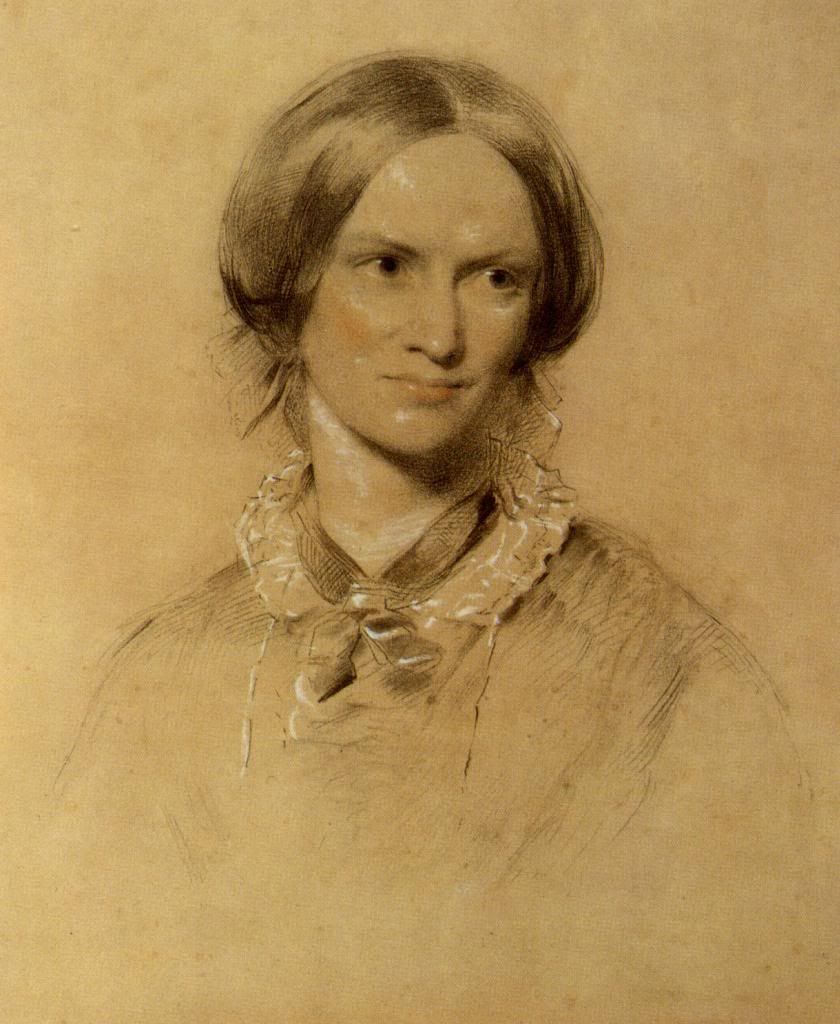
I have been hoping to write about Villette since I finished it almost two weeks ago. It was my second read for the Classics Club, and my second Charlotte Bronte, so I think that makes it pretty significant. My first impression was the familiarity of the writing- if I had no inclination of the author or book title, but merely "read it blind," I think I would still know it was Charlotte Bronte. Even though I had never read it before, the style was so familiar because it was so apparently Charlotte.
Because I had read Lyndall Gordon's amazing biography on Charlotte beforehand, I felt prepared for Villette. I read it with an eye for what it said about Charlotte- her life, her experiences, her opinions- and I think this colored my experience of it. Ultimately, it is a book in which the plot is only secondary. Character reigns supreme over the novel- that of the narrator, Lucy Snowe, as well as those around her. The focus of the book lies primarily with the development of Lucy's character. Lucy Snowe is a woman of storm and shadow- the first she denies and stifles within herself, the other she uses to hide and protect herself from what she does not want to face. The metaphors of storms and shadows occur over and over throughout the narrative, reflecting Lucy's inner world as it describes the outer setting. The stormy nights are the ones in which new discoveries are made, new secrets come to light, and when she must internally struggle with herself and her life's path.
And the shadows? When I think of what exactly a shadow is, I see how well it fits with Lucy. A shadow is not distinct or clear, it can be altered, it is not a true representation of the real object, and (perhaps most importantly here), it can be interpreted in a myriad of ways. Figuratively, Lucy hides herself in the shadows, content to stay hidden and keep her true, inner self from others and even partly from herself. She does not even truly open herself to us, her readers. Unlike Jane Eyre, she is more cautious and reserved, less open about details. She does not reveal everything to us, leaving parts of the story unexplained and hidden from view. In the story itself Lucy is often invisible, her friends and acquaintances taking center stage while she quietly observes and narrates from the sidelines. She tends to disappear beneath the lives of those around her, unobserved and content to be so. In fact, whole chapters often go by where she hardly makes an entrance. She also hides in plain sight from each of her friends and acquaintances. Each one sees her differently, interpreting her by a different light, for they see her as she wishes to be seen by them. Therefore, she is never truly seen because she is not seen as she is. She becomes insubstantial, a mere image of herself, as a shadow is only a representation of reality. I did wonder how much of this is true of us? Don't we change our demeanor and personalities based on those we are interacting with; aren't we different around different people? If that is the case, then when are we truly ourselves? Is it with those we are only the closest to or are our true selves an amalgamation of the various parts we present to others?
Lyndall Gordon stated that Charlotte's novels all represent Charlotte's struggle to balance Reason and Passion, while not becoming overcome by either. After reading that, I saw how true it was in Jane Eyre and I watched for it in Villette. Sure enough, it was there. Lucy Snowe's story is affected and altered by the fact that she fights against her nature and her passionate inclinations. This too ties into her desire to stay hidden in shadow. Desperately she tries to stifle the part of herself that yearns for more, focusing on the necessity of "knocking on the head" her longings and desires. When she starts to feel a passion for Dr. John, she figuratively buries those feelings and their potential by literally burying his letters beneath the earth. Lucy is content to stay in the shadows because she feels safer there- not safe from the threat of others, but safe from herself. She fears the deeper parts within herself, which I think is one of the most tragic aspects of the book, for it alters her life and the person she becomes. In Lucy, I think Charlotte is trying to demonstrate to herself, as well as to her readers, the danger of letting logic and reason possess you fully; perhaps this was also Charlotte's way of reminding herself that it is necessary to let passion and desire in, despite the fears.
I think readers today can still identify with this struggle- of trying to understand ourselves, of wrestling with our natures, of trying to be something we are not. I know that I often fight against who I am, both the negative and the positive, and struggle with the desire to be someone else, that elusive "other" I think I should be. Villette, as well as Jane Eyre, resonate with me because I am still defining myself and finding my place in the world, just as Charlotte was and just as her heroines strive to do. As Villette (and Jane Eyre) demonstrate, the process does not require one to have all of the answers or the perfect life plan. Instead, it involves using each experience- with all of its uncertainty and risk- to discover and lay bare what is hidden within me. To not hide from who I am, but to allow it into the light. To be open to the potential of new discoveries, and embracing- not hiding from- the fear and trepidation that accompanies each revelation. To be strong enough to recognize and embrace who I am, without denying what I am and what I feel. Jane Eyre demonstrates this by doing it, by being true to herself, by following her inclinations and listening to her inner self. Lucy Snowe demonstrates this by not doing so, by hiding from any expression of her inner self, by denying her passions and desires, by choosing a safe but unfulfilling life over the promise of something more.
With Villette, Charlotte's works continue to exert a powerful force of brilliant insight, demonstrating just how timeless her works really are. Jane Eyre will always remain my favorite, but I am more pleased than I expected with the experience I had in Villette, and am more of a Bronte fan than ever before.
A Sunday morning. Calm, quiet, peaceful. Quite different from our Friday night, in which more bad news shook us to our cores and caused us to reevaluate our present and our future. It is terrifying to stand at the cliff edge and look down, unable to see what is below. But as we always do, we shook ourselves free of the immediate fear and started to make the first fumbling steps in this new darkness. And this morning, we breathe and we close our eyes and we breathe some more. We find solace in the simple comforts, which for me is usually between the pages of a book. On my way out the door to work yesterday, I impetuously grabbed the copy of Louisa May Alcott's journals sitting on my bedside table and flipped it open, praying for some guidance, for some advice, for some perspective to ease the churning in my stomach. My eyes fell on an entry from February 28th, 1868. Louisa had just spent several months in Boston, feverishly writing, and was preparing to go back home to Concord. In looking back on what she accomplished during those months, she wrote, "Not a bad two months' work. I can imagine an easier life, but with love, health, and work I can be happy; for these three help one to do, to be, and to endure all things." Yes. Yes. Sigh of relief. Once again, I felt that connection we share, she and I. And I went off to work feeling determined, with my chin up.
~~~~~~~~~~~~~~~~~~
I have been hoping to write about Villette since I finished it almost two weeks ago. It was my second read for the Classics Club, and my second Charlotte Bronte, so I think that makes it pretty significant. My first impression was the familiarity of the writing- if I had no inclination of the author or book title, but merely "read it blind," I think I would still know it was Charlotte Bronte. Even though I had never read it before, the style was so familiar because it was so apparently Charlotte.

Because I had read Lyndall Gordon's amazing biography on Charlotte beforehand, I felt prepared for Villette. I read it with an eye for what it said about Charlotte- her life, her experiences, her opinions- and I think this colored my experience of it. Ultimately, it is a book in which the plot is only secondary. Character reigns supreme over the novel- that of the narrator, Lucy Snowe, as well as those around her. The focus of the book lies primarily with the development of Lucy's character. Lucy Snowe is a woman of storm and shadow- the first she denies and stifles within herself, the other she uses to hide and protect herself from what she does not want to face. The metaphors of storms and shadows occur over and over throughout the narrative, reflecting Lucy's inner world as it describes the outer setting. The stormy nights are the ones in which new discoveries are made, new secrets come to light, and when she must internally struggle with herself and her life's path.
And the shadows? When I think of what exactly a shadow is, I see how well it fits with Lucy. A shadow is not distinct or clear, it can be altered, it is not a true representation of the real object, and (perhaps most importantly here), it can be interpreted in a myriad of ways. Figuratively, Lucy hides herself in the shadows, content to stay hidden and keep her true, inner self from others and even partly from herself. She does not even truly open herself to us, her readers. Unlike Jane Eyre, she is more cautious and reserved, less open about details. She does not reveal everything to us, leaving parts of the story unexplained and hidden from view. In the story itself Lucy is often invisible, her friends and acquaintances taking center stage while she quietly observes and narrates from the sidelines. She tends to disappear beneath the lives of those around her, unobserved and content to be so. In fact, whole chapters often go by where she hardly makes an entrance. She also hides in plain sight from each of her friends and acquaintances. Each one sees her differently, interpreting her by a different light, for they see her as she wishes to be seen by them. Therefore, she is never truly seen because she is not seen as she is. She becomes insubstantial, a mere image of herself, as a shadow is only a representation of reality. I did wonder how much of this is true of us? Don't we change our demeanor and personalities based on those we are interacting with; aren't we different around different people? If that is the case, then when are we truly ourselves? Is it with those we are only the closest to or are our true selves an amalgamation of the various parts we present to others?
Lyndall Gordon stated that Charlotte's novels all represent Charlotte's struggle to balance Reason and Passion, while not becoming overcome by either. After reading that, I saw how true it was in Jane Eyre and I watched for it in Villette. Sure enough, it was there. Lucy Snowe's story is affected and altered by the fact that she fights against her nature and her passionate inclinations. This too ties into her desire to stay hidden in shadow. Desperately she tries to stifle the part of herself that yearns for more, focusing on the necessity of "knocking on the head" her longings and desires. When she starts to feel a passion for Dr. John, she figuratively buries those feelings and their potential by literally burying his letters beneath the earth. Lucy is content to stay in the shadows because she feels safer there- not safe from the threat of others, but safe from herself. She fears the deeper parts within herself, which I think is one of the most tragic aspects of the book, for it alters her life and the person she becomes. In Lucy, I think Charlotte is trying to demonstrate to herself, as well as to her readers, the danger of letting logic and reason possess you fully; perhaps this was also Charlotte's way of reminding herself that it is necessary to let passion and desire in, despite the fears.
I think readers today can still identify with this struggle- of trying to understand ourselves, of wrestling with our natures, of trying to be something we are not. I know that I often fight against who I am, both the negative and the positive, and struggle with the desire to be someone else, that elusive "other" I think I should be. Villette, as well as Jane Eyre, resonate with me because I am still defining myself and finding my place in the world, just as Charlotte was and just as her heroines strive to do. As Villette (and Jane Eyre) demonstrate, the process does not require one to have all of the answers or the perfect life plan. Instead, it involves using each experience- with all of its uncertainty and risk- to discover and lay bare what is hidden within me. To not hide from who I am, but to allow it into the light. To be open to the potential of new discoveries, and embracing- not hiding from- the fear and trepidation that accompanies each revelation. To be strong enough to recognize and embrace who I am, without denying what I am and what I feel. Jane Eyre demonstrates this by doing it, by being true to herself, by following her inclinations and listening to her inner self. Lucy Snowe demonstrates this by not doing so, by hiding from any expression of her inner self, by denying her passions and desires, by choosing a safe but unfulfilling life over the promise of something more.
With Villette, Charlotte's works continue to exert a powerful force of brilliant insight, demonstrating just how timeless her works really are. Jane Eyre will always remain my favorite, but I am more pleased than I expected with the experience I had in Villette, and am more of a Bronte fan than ever before.
Saturday, February 2, 2013
A Piece of Myself
Currently Reading: Villette by Charlotte Bronte and Wildwood by Colin Meloy
Winter is slowly dragging on, never quite making up its mind whether or not it wants to be over. Tantalizing whiffs of spring hang in the air on the warmer days, only to be masked by gusts of snow blowing over the farm fields and reminding us that winter is still here to stay. Nevertheless, Nate and I dubbed today our "cleaning day," finally putting away the Christmas decorations (I know, we're pathetic!) and brightening the interior with anticipation of brighter days to come. I always have a difficult time in the winter- the lack of sun and chances to go outdoors makes me moody and sullen. By February, my cheerful/optimistic side goes on vacation, while my grumpy/morose side takes the field. Poor Nathan. He's a trooper though, especially since I tend to fight the negative feelings with everything I have.
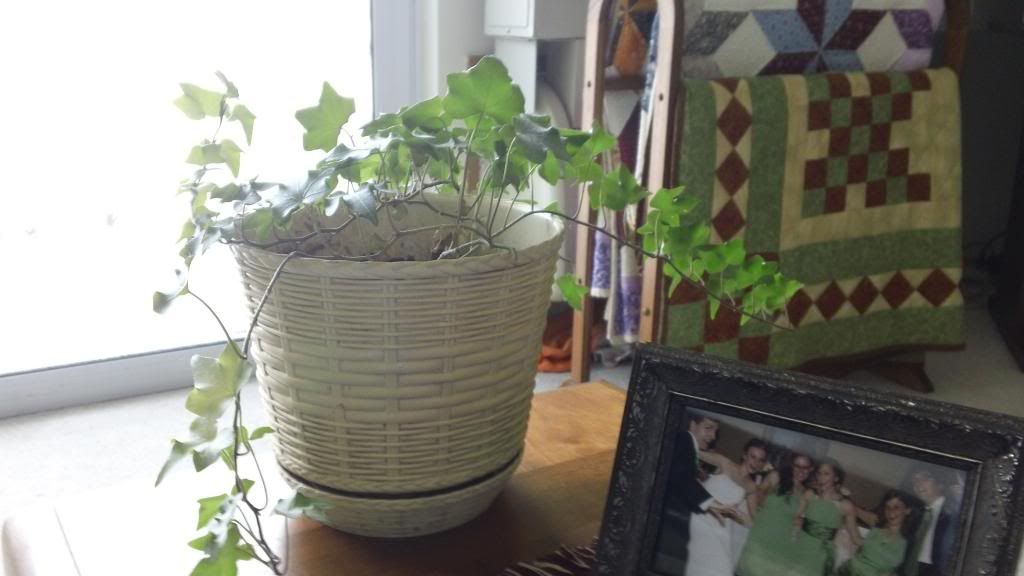
I moved my pot of ivy to the coffee table and that alone makes spring seem closer than ever. So this morning, I am back to cheerful, enjoying little things like a clean bathroom, a mug of hot cocoa, almost-finished homework, and an afternoon of writing and Villette. Tomorrow I am meeting a good friend that I haven't seen in far too long, and I look forward to that too.
Last week, Nate and I finished Little Women, my first for Classics Club. This was my third re-read, but Nathan's first introduction to it. We did it right- Nate stretched out on the couch or on the bed as I read out loud, enacting each scene and character, complete with voices. I'm sure Jo would have been proud of me.
I have always loved Little Women. There is no need for me to explain what it is about the writing and the characters that are so powerful and endearing, for I know that many, many readers have experienced that too. We laugh at Jo's antics, and feel Teddy's heartbreak, and weep when Beth takes her last breath. But this time, the book tugged at me a little bit more, pulled me in a little bit deeper, and spoke to me in a way it never had before. I can't put my finger on why that is. Perhaps it is because Nate and I read it out loud together. It is amazing how much difference it makes to read with your voice, for it turns words from flat, two-dimensional blotches of ink into a conversation, a dream, an inward sigh. (Reading out loud has always been far superior to me than reading quietly... probably to the detriment of my family, but they never seemed to mind). The book took on a new life when I read it out loud, more real than before, more concrete, more alive. And sharing the reading experience together turned every evening into a literary date night. Now, I will always have the memories of sharing Little Women (and all of the discussions and laughs and tears that accompanied it) with my husband.
Maybe the book meant more to me this time around because I identify even more with Jo now that I've gotten older. How could I not see myself in her when I was a child- dramatic, feisty-tempered, bookish, and imaginative as we were? As a girl, I realized it was OK to be who I was, because Jo was too. But now, as a young woman working on discovering who I am and what my role is in life, Jo comes back, feisty as ever, to show me that we can still be ourselves, even with new responsibilities and expectations. We can still have moody February days, and be dramatic, and wonder whether we will ever achieve what we desire, yet still be good sisters and wives and daughters and mothers. Neither Jo nor I really changed when we grew up, and that gives me so much comfort.
And maybe the book means more to me now because I have recently been learning so much about its author, Louisa May Alcott, who is also a kindred spirit to me. Knowing the context of Louisa's life, as well as her relationship with the book, really helped me understand it in a new light. Nate and I often stopped to discuss the description of Mr. March, or Jo's relationship with her mother or with Beth, in light of how that reflected Louisa's own thoughts and realities. I believe it was Eve LaPlante's Marmee & Louisa which stated that Jo March is Louisa's alter ego, but she is also just as much Louisa as she wished she were, rather than Louisa as she was. Whereas Jo is loved and humored, despite her scrapes and mishaps, Louisa had a much harder time of it, very often misunderstood by her own family. Instead of living poor but comfortably in a stable home, the Alcott's moved all over Boston and Concord, from one temporary house or boarding house to another, and were often separated as the girls grew older and worked to support the family. In Little Women, Louisa wrote of herself and her sisters' childhoods, but she also imagined a new childhood for all of them, a childhood she wished she could have had. That knowledge and understanding illuminated Little Women for me in a new way and made the re-read both rewarding and unforgettable.
I know that Little Women will always be a book I come back to for comfort, guidance, and enjoyment. It will be a book I will read to my children. It will be a book that will still teach me, even as I age. And I hope I will never cease to find a piece of myself within it.
Winter is slowly dragging on, never quite making up its mind whether or not it wants to be over. Tantalizing whiffs of spring hang in the air on the warmer days, only to be masked by gusts of snow blowing over the farm fields and reminding us that winter is still here to stay. Nevertheless, Nate and I dubbed today our "cleaning day," finally putting away the Christmas decorations (I know, we're pathetic!) and brightening the interior with anticipation of brighter days to come. I always have a difficult time in the winter- the lack of sun and chances to go outdoors makes me moody and sullen. By February, my cheerful/optimistic side goes on vacation, while my grumpy/morose side takes the field. Poor Nathan. He's a trooper though, especially since I tend to fight the negative feelings with everything I have.

I moved my pot of ivy to the coffee table and that alone makes spring seem closer than ever. So this morning, I am back to cheerful, enjoying little things like a clean bathroom, a mug of hot cocoa, almost-finished homework, and an afternoon of writing and Villette. Tomorrow I am meeting a good friend that I haven't seen in far too long, and I look forward to that too.
Last week, Nate and I finished Little Women, my first for Classics Club. This was my third re-read, but Nathan's first introduction to it. We did it right- Nate stretched out on the couch or on the bed as I read out loud, enacting each scene and character, complete with voices. I'm sure Jo would have been proud of me.
I have always loved Little Women. There is no need for me to explain what it is about the writing and the characters that are so powerful and endearing, for I know that many, many readers have experienced that too. We laugh at Jo's antics, and feel Teddy's heartbreak, and weep when Beth takes her last breath. But this time, the book tugged at me a little bit more, pulled me in a little bit deeper, and spoke to me in a way it never had before. I can't put my finger on why that is. Perhaps it is because Nate and I read it out loud together. It is amazing how much difference it makes to read with your voice, for it turns words from flat, two-dimensional blotches of ink into a conversation, a dream, an inward sigh. (Reading out loud has always been far superior to me than reading quietly... probably to the detriment of my family, but they never seemed to mind). The book took on a new life when I read it out loud, more real than before, more concrete, more alive. And sharing the reading experience together turned every evening into a literary date night. Now, I will always have the memories of sharing Little Women (and all of the discussions and laughs and tears that accompanied it) with my husband.
Maybe the book meant more to me this time around because I identify even more with Jo now that I've gotten older. How could I not see myself in her when I was a child- dramatic, feisty-tempered, bookish, and imaginative as we were? As a girl, I realized it was OK to be who I was, because Jo was too. But now, as a young woman working on discovering who I am and what my role is in life, Jo comes back, feisty as ever, to show me that we can still be ourselves, even with new responsibilities and expectations. We can still have moody February days, and be dramatic, and wonder whether we will ever achieve what we desire, yet still be good sisters and wives and daughters and mothers. Neither Jo nor I really changed when we grew up, and that gives me so much comfort.
And maybe the book means more to me now because I have recently been learning so much about its author, Louisa May Alcott, who is also a kindred spirit to me. Knowing the context of Louisa's life, as well as her relationship with the book, really helped me understand it in a new light. Nate and I often stopped to discuss the description of Mr. March, or Jo's relationship with her mother or with Beth, in light of how that reflected Louisa's own thoughts and realities. I believe it was Eve LaPlante's Marmee & Louisa which stated that Jo March is Louisa's alter ego, but she is also just as much Louisa as she wished she were, rather than Louisa as she was. Whereas Jo is loved and humored, despite her scrapes and mishaps, Louisa had a much harder time of it, very often misunderstood by her own family. Instead of living poor but comfortably in a stable home, the Alcott's moved all over Boston and Concord, from one temporary house or boarding house to another, and were often separated as the girls grew older and worked to support the family. In Little Women, Louisa wrote of herself and her sisters' childhoods, but she also imagined a new childhood for all of them, a childhood she wished she could have had. That knowledge and understanding illuminated Little Women for me in a new way and made the re-read both rewarding and unforgettable.
I know that Little Women will always be a book I come back to for comfort, guidance, and enjoyment. It will be a book I will read to my children. It will be a book that will still teach me, even as I age. And I hope I will never cease to find a piece of myself within it.
Wednesday, January 23, 2013
Joining the Classics Club
Well, I'm going to do it. I'm jumping into the Classics Club. As they describe at their blog, "The Classics Club is a club created to inspire people to read and blog
about classic books. There’s no time limit to join and you’re most
welcome, as long as you’re willing to sign up to read and write on your
blog about 50+ classic books in at most five years. The perk is that,
not only will you have read 50+ incredible (or at the very least
thought-provoking) works in five years, you’ll get to do it along with
all of these people. Join us! We’re very friendly." As I read the books on my list below, I link that blog post to the Classics Club site and hopefully get feedback from others. I love the idea of an online blogger club devoted to exploring the classics and I look forward to challenging myself. Some of the books I have listed below are re-reads (which is allowed- I've marked them with a star) and many are new reads- those books that I have always wanted to read someday but have never pushed myself to pick up. I hope that with the Classics Club challenge, I will be inspired to broaden my reading horizons like never before. Which isn't to say this is all I will be reading. I have many memoirs and biographies still to explore, as well as the fantasy and contemporary novels I also love to read. I refuse to be hemmed in by a list, especially when it comes to my reading. The list below can also change, according to the Classics Club rules. If I decide to read a different classic or want to take one off my list, I can do that. It is a living list, one that can change and adapt to my reading tastes. My blogging style or frequency will not change; rather, I view this endeavor as a personal reading challenge, but one that will hopefully bring me in contact with more literary bloggers.
Here then are my 51 classics, to (hopefully) be completed by January 23, 2018.
- My Dearest Friend: Letters of John and Abigail Adams ~John and Abigail Adams
- Things Fall Apart ~ Chinua Achebe*
- Little Women ~Louisa May Alcott*
- Moods ~Louisa May Alcott
- Selected Letters of Louisa May Alcott ~Louisa May Alcott
- Journals of Louisa May Alcott ~Louisa May Alcott
- Handmaid’s Tale ~Margaret Atwood
- Persuasion ~Jane Austen
- Fahrenheit 451 ~Ray Bradbury
- Tenant of Wildfell Hall ~Anne Bronte
- Agnes Gray ~Anne Bronte
- Jane Eyre ~Charlotte Bronte*
- The Professor ~Charlotte Bronte
- Villette ~Charlotte Bronte
- Pilgrim’s Progress ~John Bunyan
- Power of Myth ~Joseph Campbell
- The Awakening ~Kate Chopin*
- Little Dorritt ~Charles Dickens
- Bleak House ~Charles Dickens
- A Christmas Carol ~Charles Dickens*
- Pickwick Papers ~Charles Dickens
- Tales of the Elders of Ireland ~Ann Dooley
- The Brothers Karamazov ~Fyodor Dostoevsky
- Middlemarch ~George Eliot
- Silas Marner ~George Eliot
- The Great Gatsby ~F. Scott Fitzgerald
- A Lesson Before Dying ~Ernest J. Gaines
- Early Irish Myths and Sagas ~Jeffrey Gantz
- Cranford ~Elizabeth Gaskell
- Wives and Daughters ~Elizabeth Gaskell
- Madwoman in the Attic ~Sandra M. Gilbert
- For Whom the Bell Tolls ~Ernest Hemingway
- Siddhartha ~Herman Hesse*
- The Church in Early Irish Society ~Kathleen Hughes
- Collected Poems ~Edna St. Vincent Millay
- Gone With the Wind ~Margaret Mitchell
- Anne of Green Gables ~L.M. Montgomery*
- Song of Solomon ~Toni Morrison
- A Thousand-Mile Walk to the Gulf ~John Muir
- 1984 ~George Orwell
- Selected Poetry ~Ranier Maria Rilke
- Frankenstein ~Mary Shelley
- Dracula ~Bram Stoker
- Walden & Civil Disobedience ~Henry David Thoreau*
- The Hobbit ~J.R.R. Tolkien*
- Anna Karenina ~Leo Tolstoy
- The Color Purple ~Alice Walker
- Age of Innocence ~Edith Wharton
- Ethan Frome ~Edith Wharton*
- Picture of Dorian Gray ~Oscar Wilde
- Mrs. Dalloway ~Virginia Woolf
What do you think? To me, to-read lists contain the excitement of the first day of school, Christmas, and entering a new library all rolled into one. I am excited to meet like-minded readers and hear their thoughts on what they read and I look forward to sharing my own reading experiences more fully. Here we go!
Posts on My Classics Club Books (I'm linking these as I go):
Little Women: A Piece of Myself
Villette: In Villette
Early Irish Myths & Sagas: Bits and Pieces
The Journals of Louisa May Alcott: Thoughts on a Journal
Selected Letters of Louisa May Alcott: The End of May
Mrs. Dalloway: Summering
Here then are my 51 classics, to (hopefully) be completed by January 23, 2018.
- My Dearest Friend: Letters of John and Abigail Adams ~John and Abigail Adams
- Things Fall Apart ~ Chinua Achebe*
- Little Women ~Louisa May Alcott*
- Moods ~Louisa May Alcott
- Selected Letters of Louisa May Alcott ~Louisa May Alcott
- Journals of Louisa May Alcott ~Louisa May Alcott
- Handmaid’s Tale ~Margaret Atwood
- Persuasion ~Jane Austen
- Fahrenheit 451 ~Ray Bradbury
- Tenant of Wildfell Hall ~Anne Bronte
- Agnes Gray ~Anne Bronte
- Jane Eyre ~Charlotte Bronte*
- The Professor ~Charlotte Bronte
- Villette ~Charlotte Bronte
- Pilgrim’s Progress ~John Bunyan
- Power of Myth ~Joseph Campbell
- The Awakening ~Kate Chopin*
- Little Dorritt ~Charles Dickens
- Bleak House ~Charles Dickens
- A Christmas Carol ~Charles Dickens*
- Pickwick Papers ~Charles Dickens
- Tales of the Elders of Ireland ~Ann Dooley
- The Brothers Karamazov ~Fyodor Dostoevsky
- Middlemarch ~George Eliot
- Silas Marner ~George Eliot
- The Great Gatsby ~F. Scott Fitzgerald
- A Lesson Before Dying ~Ernest J. Gaines
- Early Irish Myths and Sagas ~Jeffrey Gantz
- Cranford ~Elizabeth Gaskell
- Wives and Daughters ~Elizabeth Gaskell
- Madwoman in the Attic ~Sandra M. Gilbert
- For Whom the Bell Tolls ~Ernest Hemingway
- Siddhartha ~Herman Hesse*
- The Church in Early Irish Society ~Kathleen Hughes
- Collected Poems ~Edna St. Vincent Millay
- Gone With the Wind ~Margaret Mitchell
- Anne of Green Gables ~L.M. Montgomery*
- Song of Solomon ~Toni Morrison
- A Thousand-Mile Walk to the Gulf ~John Muir
- 1984 ~George Orwell
- Selected Poetry ~Ranier Maria Rilke
- Frankenstein ~Mary Shelley
- Dracula ~Bram Stoker
- Walden & Civil Disobedience ~Henry David Thoreau*
- The Hobbit ~J.R.R. Tolkien*
- Anna Karenina ~Leo Tolstoy
- The Color Purple ~Alice Walker
- Age of Innocence ~Edith Wharton
- Ethan Frome ~Edith Wharton*
- Picture of Dorian Gray ~Oscar Wilde
- Mrs. Dalloway ~Virginia Woolf
What do you think? To me, to-read lists contain the excitement of the first day of school, Christmas, and entering a new library all rolled into one. I am excited to meet like-minded readers and hear their thoughts on what they read and I look forward to sharing my own reading experiences more fully. Here we go!
Posts on My Classics Club Books (I'm linking these as I go):
Little Women: A Piece of Myself
Villette: In Villette
Early Irish Myths & Sagas: Bits and Pieces
The Journals of Louisa May Alcott: Thoughts on a Journal
Selected Letters of Louisa May Alcott: The End of May
Mrs. Dalloway: Summering
Subscribe to:
Posts (Atom)
Keep On Reading...
